
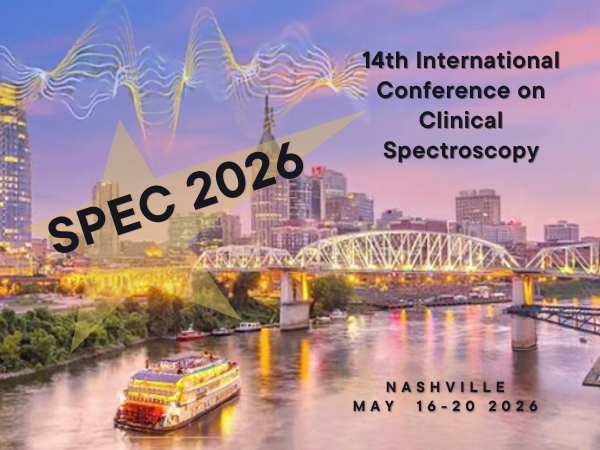
The TROPHY project was actively represented at the 14th International Conference of Clinical Vibrational Spectroscopy (SPEC 2026), held at Vanderbilt University in Nashville, Tennessee (USA), from 16 to 20 May 2026.
During Session 7 (Ex vivo Histology), Dr. Victor Alcolea-Rodriguez (Politecnico di Milano / CNR-IFN) delivered an oral presentation titled “Label-Free Raman Spectroscopy in Head and Neck Squamous Cell Carcinoma: From Tumor Biopsies to Therapy Response Monitoring in Patient-Derived Tumor Slice Cultures”. The talk showcased advanced vibrational imaging approaches used to map chemical markers—such as collagen, keratin, and lipids—across head and neck cancer biopsies and patient-derived tumor slice cultures (PDTSCs). The research demonstrated high diagnostic accuracy and highlighted how Raman spectroscopy can track biochemical changes following treatment with Durvalumab, offering promising avenues for monitoring immunotherapy response.
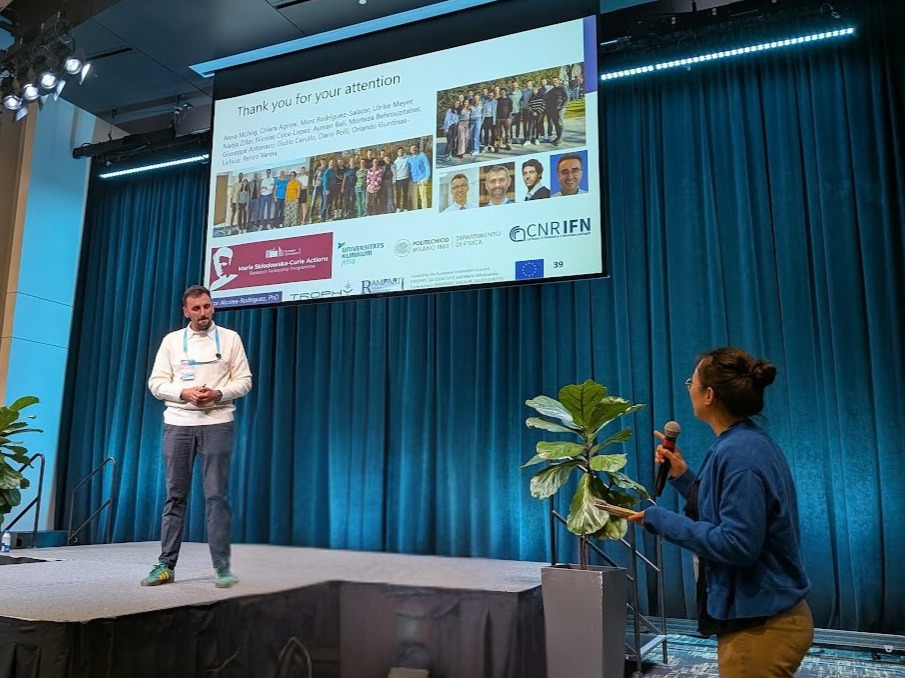
The clinical and translational dimension of TROPHY was further emphasized by Dr. Anna Mühlig from Jena University Hospital, who presented a talk on the application of vibrational spectroscopy for the analysis of head and neck tissue slices. Her contribution underscored the strong synergy within the consortium between clinical research and biophotonic technology development.
In addition, Dr. Renzo Vanna (CNR-IFN / Politecnico di Milano) participated as an invited panelist in Panel 3: The Future of Clinical Spectroscopy, moderated by Prof. Nick Stone (University of Exeter). The round table brought together international leaders from academia and industry—including Holly Butler (Dxcover Ltd.), Isaac Pence (UT Southwestern Medical Center), and Andrea Locke (Vanderbilt University)—to discuss current challenges, translational strategies, and future perspectives for bringing vibrational spectroscopy and AI into routine clinical diagnostics.
By bridging ultrafast photonics, vibrational spectroscopy, artificial intelligence, and clinical oncology, the TROPHY consortium continues to contribute actively to international scientific discussions aimed at advancing precision medicine in cancer care.